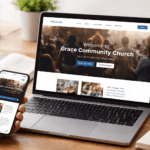




Why Small Businesses Need Great Websites in 2026
A small business website is no longer just a digital brochure. It is your first impression, your credibility builder, your local discovery tool, and one of the only assets you truly control online.
In 2026, customers expect a real business to have a real online presence. Before they call, buy, book, visit, or request a quote, they usually search your business online. They want to know what you do, where you are, how to contact you, whether you look trustworthy, and whether your business feels current and professional.
If that information is missing, outdated, slow to load, or hard to read on mobile, many prospects will move on before you ever know they were interested. A strong website helps small businesses compete with bigger brands by making trust, clarity, and discoverability work in their favor.
5 Reasons Small Businesses Need Great Websites
A great small business website does more than “look nice.” It helps customers find you, understand you, trust you, and take action. It can answer questions, reduce hesitation, improve local visibility, and create sales opportunities even when you are not actively online.
Your Website Shapes the First Impression Before a Customer Ever Contacts You
For many small businesses, the website is the first handshake. A potential customer may see your brand online long before they call your office, visit your location, or ask for a quote. That means your website is often making the first argument for why someone should trust your business.
Nielsen Norman Group explains that first impressions strongly affect how users judge a website’s usability, credibility, and overall quality. Stanford’s Web Credibility research likewise emphasizes that professional design, clear legitimacy signals, and visible contact information shape whether people believe a website is trustworthy.

Customers Search Online First, and Your Website Helps Them Find and Understand You
Search behavior now shapes how small businesses are discovered. Google’s Business Profile documentation makes clear that businesses can appear on Google Search and Maps, helping customers find them and build trust. Google also describes a Business Profile as a way to turn people who find you on Search and Maps into new customers.
That matters because local buying decisions often start with research. People search for services near them, compare businesses, check hours, read reviews, examine photos, and look for a website that confirms the business is real and active.
The U.S. Small Business Administration also notes that online promotion remains central for small businesses, and its 2025 small business trends post says 73% of small businesses have a website. In other words, your competitors are already online.

Mobile-Friendly Websites Matter for Both SEO and Real Customers
A small business website must work beautifully on a phone, not just on a desktop. Google Search Central states that Google primarily uses the mobile version of a site for indexing and ranking. That means mobile usability is not a cosmetic detail. It directly affects search visibility.
StatCounter’s platform data also shows how important mobile traffic remains. In February 2026, mobile accounted for 52.48% of worldwide web traffic. So if your site is hard to use on a phone, you are making it harder for both Google and real people to understand your business.
A strong mobile site should load fast, display clearly, keep buttons easy to tap, and make the essentials obvious: services, location, hours, contact details, pricing cues, reviews, and clear calls to action.

A Great Website Builds Trust and Gives Customers the Confidence to Contact or Buy
Trust is one of the biggest conversion factors for a small business. Customers want to know whether you are real, current, reachable, and capable. Your website helps answer that quickly.
Google’s Business Profile guidance highlights the importance of reviews, hours, photos, and accurate business details. Google also notes that honest reviews can help potential customers decide. Nielsen Norman Group adds that design quality, disclosure, and current content all contribute to trustworthiness online.
For small businesses, this means your website should clearly show who you are, what you do, who you serve, where you operate, and what action a visitor should take next.

Helpful Content and Strong SEO Help Your Website Keep Working After Business Hours
A great website is not just a homepage. It is a long-term growth tool. Helpful pages, service descriptions, FAQ sections, location pages, and articles can continue bringing in traffic and answering customer questions long after you hit publish.
Google’s Search Essentials emphasizes helpful, reliable, people-first content. Google also recommends using the words people actually search for in prominent places such as titles, headings, alt text, and link text. That means educational content is not filler. It is part of how your business gets discovered.
For small businesses, this could include pages like “How Our Process Works,” “Common Questions,” “Pricing Guide,” “Areas We Serve,” or blog posts that educate customers before they reach out. Good SEO is often just clear communication structured in a way that both people and search engines can understand.

Final Thoughts
Small businesses do not need bloated websites. They need clear, fast, trustworthy, and well-structured websites that help real customers take real action. In a world where people research first and decide quickly, your website can be one of your most valuable business assets.
A great website helps your business get found, look credible, answer questions, reduce friction, and generate leads. That is why in 2026, a serious small business should not treat its website like an afterthought.
Frequently Asked Questions About Small Business Websites
Do small businesses really need a website if they already use social media?
Yes. Social media is valuable, but it is rented space. Your website is an asset you control. It gives you a home for your services, contact information, search visibility, FAQs, lead forms, and content that can rank in Google over time.
Can a small business compete online without a huge budget?
Absolutely. A clean website, strong local SEO, good service pages, real testimonials, helpful content, and a properly managed Google Business Profile can help a small business compete far more effectively than many owners realize.
What should every small business website include?
At minimum: a clear homepage, service pages, phone number, contact form, location or service area, reviews, mobile-friendly design, and clear calls to action. Many businesses also benefit from FAQs, blog content, and local landing pages.
How often should a small business update its website?
Regularly. Keep your hours, services, pricing cues, photos, and contact information current. Add new articles or updates over time so both customers and search engines can see that the business is active.